


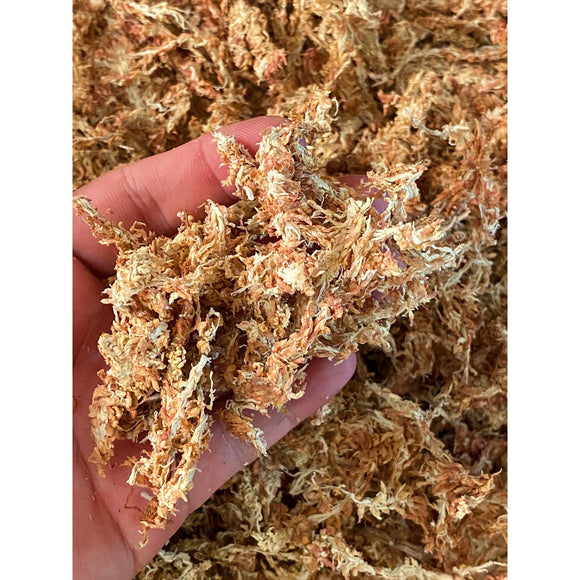


GrowPharm - Premium Chilean Sphagnum Moss (Sphagnum magellanicum)
GrowPharm Chilean Sphagnum Moss is premium dried long-fibre Sphagnum magellanicum for orchids, propagation, houseplants, bonsai, terrariums, vivariums, crafts and other horticultural uses.
Sphagnum moss is especially useful for orchids, plant propagation, aroids, mounted plants and other applications where a lightweight, moisture-retentive growing medium is desirable.
Why Use Sphagnum Moss?
Sphagnum magellanicum is a fibrous moss with an exceptional ability to absorb and retain water. At the same time, its structure can provide air space around plant roots when the moss is used without excessive compression.
This combination of moisture retention and aeration makes sphagnum useful for plants that benefit from consistent moisture but do not perform well in dense, poorly aerated growing media.
GrowPharm Chilean Sphagnum Moss can be used for:
- Orchids
- Phalaenopsis orchids
- Dendrobium orchids
- Oncidium orchids
- Orchid propagation and rehabilitation
- Plant cuttings and propagation
- Air layering
- Rooting houseplants
- Aroids and tropical plants
- Mounted orchids and epiphytes
- Bonsai
- Terrariums and vivariums
- Carnivorous plants where sphagnum is an appropriate medium
- Seed starting and specialized propagation
- Moisture retention in custom potting mixes
- Bulb and plant storage
- Floral arrangements and wreaths
- Dioramas, model railways and miniature landscapes
Sphagnum Moss for Orchids
Sphagnum moss is one of the most widely used growing media for orchids, particularly Phalaenopsis and other orchids that benefit from consistent moisture around their roots.
It can be used by itself or combined with orchid bark and other growing media to adjust moisture retention.
Sphagnum moss can be particularly useful for:
- Newly repotted orchids
- Orchids with small root systems
- Young orchids
- Encouraging new root development
- Orchid rehabilitation
- Increasing moisture retention in bark-based orchid mixes
- Growing orchids in dry indoor environments
- Mounting orchids and other epiphytes
The key to growing orchids successfully in sphagnum moss is balancing moisture with airflow.
Do not tightly compress sphagnum moss around orchid roots. Loosely packed moss provides more air space and generally dries more predictably. Heavily compressed sphagnum may remain wet for considerably longer.
How to Prepare Sphagnum Moss
Dry sphagnum moss should normally be hydrated before it is used for potting or propagation.
- Place the amount of moss you need in a clean container.
- Add clean water and thoroughly wet the moss.
- Allow the moss time to absorb the water and fully rehydrate.
- Gently squeeze out excess water.
- The moss should feel evenly damp rather than dripping wet.
- Fluff the hydrated moss before placing it around plant roots.
Dry sphagnum expands considerably after hydration, so you may need less dry moss than expected.
How to Pot an Orchid in Sphagnum Moss
What You Need
- GrowPharm Chilean Sphagnum Moss
- An orchid
- A clear orchid pot or other well-draining orchid pot
- Clean scissors or pruning tools, if root trimming is required
- Clean water
- Mega Mass Orchid Master or another appropriate orchid fertilizer
Step 1: Choose the Right Pot
Choose a pot that fits the orchid's root system without leaving a large amount of unused space. Orchids generally do not benefit from being moved into an unnecessarily oversized container.
A clear orchid pot can make plant care easier because it allows you to observe the roots, moisture level and condition of the growing medium.
Many epiphytic orchid roots, including Phalaenopsis roots, can also photosynthesize when exposed to light.
Step 2: Prepare the Sphagnum Moss
Soak the GrowPharm Chilean Sphagnum Moss until it is thoroughly hydrated.
Gently squeeze out excess water so that the moss remains evenly damp without being saturated or dripping.
Step 3: Prepare the Orchid
Carefully remove the orchid from its old pot and remove loose or badly decomposed growing medium from around the roots.
Inspect the root system. Dead, hollow or badly rotted roots can be removed when necessary using clean cutting tools.
Step 4: Add the Sphagnum Moss
Position the orchid in its new pot and gently arrange hydrated sphagnum around and between the roots.
Use enough moss to support the plant, but do not cram or tightly compact the sphagnum into the pot.
Maintaining air space within the moss is an important part of successful sphagnum culture.
Step 5: Water Correctly
Sphagnum retains water extremely well, so orchids growing in moss may require watering less frequently than orchids grown in coarse bark.
Rather than watering on a fixed schedule, monitor how much moisture remains in the moss.
How quickly sphagnum dries depends on:
- Pot size
- Amount of moss
- How tightly the moss is packed
- Plant size
- Root system
- Temperature
- Humidity
- Air movement
- Light levels
A clear pot makes it easier to see whether sphagnum deeper inside the container remains damp even when the surface appears dry.
Avoid keeping the root zone continuously saturated unless the particular plant being grown specifically requires those conditions.
Step 6: Fertilize
Apply Mega Mass Orchid Master or another appropriate orchid fertilizer according to its directions.
Sphagnum moss is a growing medium and should not be treated as a complete fertilizer. Plants growing in sphagnum still require appropriate nutrition.
Sphagnum Moss for Plant Propagation
Sphagnum moss is particularly useful for propagation because it can maintain moisture around developing roots without requiring conventional potting soil.
Common propagation uses include:
- Rooting plant cuttings
- Propagation boxes
- Air layering
- Rooting nodes
- Aroid propagation
- Orchid propagation
- Encouraging root growth on stressed plants
Keep propagation sphagnum moist enough to support root development while avoiding stagnant, waterlogged conditions.
Sphagnum Moss for Aroids & Houseplants
Moist sphagnum moss is commonly used to root and propagate tropical houseplants, particularly aroids.
It can be useful when propagating plants such as:
- Monstera
- Philodendron
- Pothos
- Anthurium
- Syngonium
- Hoya
Sphagnum can also be incorporated into custom houseplant growing mixes when greater moisture retention is desired.
Because sphagnum retains considerably more moisture than many coarse materials such as bark or perlite, the amount used should be adjusted according to the plant, pot and growing environment.
Sphagnum Moss for Terrariums & Vivariums
Dried sphagnum moss is widely used in naturalistic terrariums and vivariums where moisture retention is useful.
It can be used:
- Around plants
- As part of a substrate system
- In humid areas of an enclosure
- Around hardscape
- In propagation areas
- As decorative natural material
GrowPharm Chilean Sphagnum Moss is sold as dried sphagnum moss, not live sphagnum moss.
Sphagnum Moss for Bonsai
Sphagnum moss has several specialized uses in bonsai and woody plant propagation.
Common applications include:
- Air layering
- Encouraging root development
- Protecting developing surface roots
- Propagation
- Maintaining moisture around newly developing roots
For most established bonsai, sphagnum is used for a particular horticultural purpose rather than as a permanent replacement for a properly structured bonsai substrate.
Other Uses for Chilean Sphagnum Moss
GrowPharm Chilean Sphagnum Moss is useful well beyond orchid growing.
- Floral arrangements: Useful as a natural moisture-retentive and decorative material.
- Wreaths and crafts: Suitable for naturalistic floral and seasonal projects.
- Model railways: Can be used to create natural-looking miniature vegetation and scenery.
- Dioramas: Useful for miniature landscapes, student projects and professional displays.
- Tabletop scenery: Can be incorporated into fantasy and miniature gaming landscapes.
- Plant storage: Can be used as a moisture-retentive packing material for certain dormant bulbs and plant material.
- Naturalistic displays: Useful in decorative horticultural installations and display cases.
Sphagnum Moss vs. Peat Moss
Sphagnum moss and peat moss are not the same horticultural product.
Sphagnum moss is the recognizable fibrous moss material harvested from the upper, living or recently living portion of sphagnum-growing environments and dried for horticultural use.
Sphagnum peat moss is primarily partially decomposed organic material that has accumulated beneath the surface of a peatland over a much longer period of time.
GrowPharm Chilean Sphagnum Moss is dried Sphagnum magellanicum moss, not bagged peat moss.
This distinction is especially important when selecting a growing medium for orchids, plant propagation, terrariums or mounted plants.
Frequently Asked Questions About Chilean Sphagnum Moss
What is Chilean sphagnum moss?
Chilean sphagnum moss is dried sphagnum harvested in Chile and used as a highly moisture-retentive horticultural growing material.
GrowPharm Chilean Sphagnum Moss is Sphagnum magellanicum sourced from Llanquihue Province in southern Chile, in the Puerto Montt region.
What species is GrowPharm Chilean Sphagnum Moss?
GrowPharm Chilean Sphagnum Moss is Sphagnum magellanicum, a sphagnum species native to southern South America and commonly known as pompón in Chile.
Is Chilean sphagnum moss good for orchids?
Yes. Sphagnum moss is widely used as an orchid growing medium because it retains moisture while its fibrous structure can maintain air spaces around orchid roots when it is not excessively compressed.
It is commonly used for Phalaenopsis, Dendrobium, Oncidium and many other orchids.
Is Chilean sphagnum moss the same as New Zealand sphagnum moss?
No. Both products are sphagnum moss used for horticulture, but they originate in different regions and may differ in species, fibre structure, appearance, grading and other characteristics.
GrowPharm Sphagnum Moss is Chilean Sphagnum magellanicum, not New Zealand sphagnum moss.
Is sphagnum moss the same as peat moss?
No. Dried sphagnum moss is the recognizable fibrous moss itself. Peat moss consists primarily of partially decomposed organic material that has accumulated in peatlands.
Does sphagnum moss need to be soaked before use?
For most potting and propagation applications, yes. Soaking dry sphagnum allows it to rehydrate fully and makes it much easier to arrange around plant roots.
After soaking, gently squeeze out excess water before use.
How much water can sphagnum moss hold?
Sphagnum moss is exceptionally absorbent and can retain many times its dry weight in water. Its high moisture-holding capacity is one of the primary reasons it is widely used for orchids, propagation and other moisture-sensitive plants.
Can I use sphagnum moss to propagate Monstera and Philodendron?
Yes. Moist sphagnum moss is commonly used to root Monstera, Philodendron and other aroids because it can maintain consistent moisture around developing roots.
Avoid keeping the moss excessively wet or stagnant.
Can I grow an orchid entirely in sphagnum moss?
Yes. Many orchids can be grown entirely in sphagnum moss.
Success depends on the orchid, how tightly the moss is packed, the size and type of pot, airflow, temperature, humidity and your watering habits.
Should sphagnum moss stay wet all the time?
Not necessarily. For orchids and many houseplants, constantly saturated sphagnum can reduce the amount of air around the roots and contribute to root problems.
Allow the moss to reach an appropriate moisture level for the particular plant before watering again rather than maintaining constant saturation.
Can dried sphagnum moss come back to life?
GrowPharm Chilean Sphagnum Moss is sold as a dried horticultural product, not as live sphagnum moss. It should not be purchased with the expectation that the dried moss will establish a living sphagnum colony.
Where does GrowPharm Sphagnum Moss come from?
GrowPharm Chilean Sphagnum Moss is sourced from Llanquihue Province in southern Chile, in the Puerto Montt region.
SKU: ORC192-150GWe Also Recommend





- choosing a selection results in a full page refresh